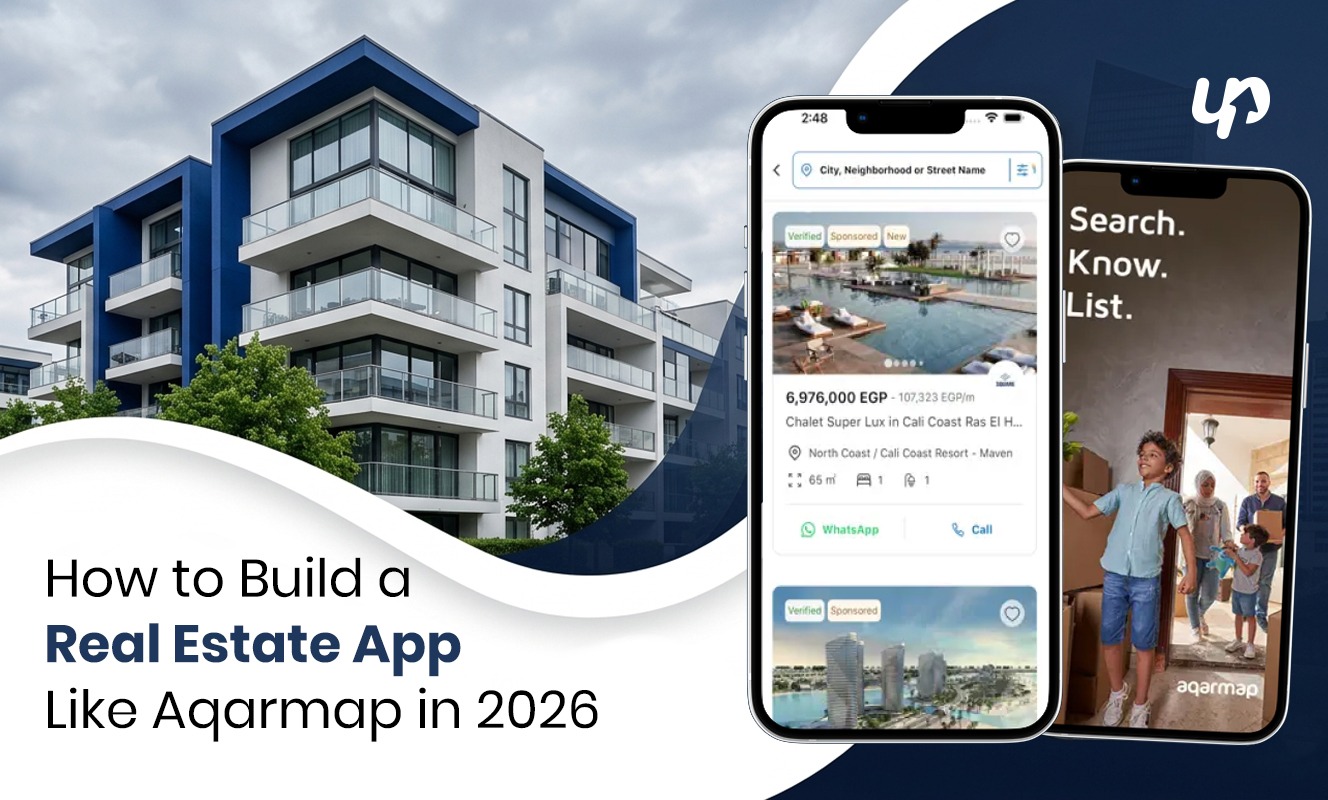
To build a real estate app like Aqarmap it is imperative to: decide on the property market you intend to operate in; decide on your feature set- property listings, intelligent search and filters, a map-based view of properties, an agents’ directory, virtual tours, mortgage calculators, and leads management; choose a robust and scalable technology stack, and find an experienced real estate app development company which is well-versed in both the technical and the real estate market specifics of the target region. The success of Aqarmap in the Egyptian and broader MENA region was due to it addressing a clear need in the market- by bringing transparency, a wealth of data, and mobile convenience to a market where this simply didn’t exist previously.
It is this exact same opportunity which exists for many other markets around the world today in 2026. Real estate apps like Aqarmap with similar features, depending on scope, cost between USD $50,000 and USD $350,000, and beyond for fully-fledged solutions with an integrated AI recommendation engine and built-in mortgage functionality. Fluper is a leading international real estate app development company, building property portals at scale, performance, and user experience levels that sophisticated property markets need.
Why Real Estate App Development Is Booming Globally
The world proptech market reached around $18.2bn in 2022 and is expected to reach over $86bn by 2032 at a 16.8% CAGR. The underlying structural driver is simple: property is the largest asset class on earth and no matter where you are (outside of the North America/ Western Europe zone), a buyer’s or renter’s process of searching, analyzing, and transacting is critically underserved digitally. In MENA (where Aqarmap launched), real estate search was a newspaper listing/ word-of-mouth/ agent relationship game that offered little transparency in terms of pricing and property specifics, no means of systematic comparison and ultimately, no genuine access to the underlying market; Aqarmap addressed this by building a data-driven portal to complement listings, with market data (as well as listings), achieving number one market share in Egypt and the underlying structural advantage.
That said, the identical gap exists in Africa, South Asia, Southeast Asia, South America, and the Gulf; a real estate mobile app development in each region that brings transparency and verification, map-based search and financial tools to a market not served by a solid digital option will capture enormous first-mover advantage and network effects once a critical listing mass is reached. As a result, 2026 offers unparalleled opportunities in this area, especially in developing markets where smartphones continue to outpace the emergence of effective digital property platforms.
What Makes Aqarmap Successful- Key Lessons
Even though the real estate app we intend to build will be targeting a specific region of the world and not similar to the existing app, it is worthwhile learning exactly what has made Aqarmap so popular because lessons are readily transferable for real estate app development anywhere in the world.
First, data depth instead of number of listings. Aqarmap didn’t just index listings. It compiled neighborhood level data such as price movement trend, demand indicators, proximity services and historical transaction information giving the end user real time market intelligence instead of a mere property listing.
Data depth is what turns a property portal from a listing index into a decision support tool and it is the element that drives repeat visits and session depth ultimately leading to ad revenues and leads generation revenues.
Second, a mobile-first architecture. Aqarmap’s explosion into the Egyptian market came with increasing mobile penetration levels where optimized mobile experience proved to be the primary search channel. Adopting a mobile-first architecture, not just a mobile port of a web platform, is crucial for the real estate mobile app development of any target market, where mobile is the most commonly used device.
Third, agents and developers integration. Aqarmap’s listings got so much better, once a structured interface was developed for real estate agents and developers allowing them to upload and update listings directly. A mechanism of verification with an analytical dashboard and lead management tools made it appealing for professional listers to contribute to data accuracy and up-to-date information on their listings.
Must-Have Features for a Real Estate App
4.1. Media-rich property listings
Listings include images, floor plans, walk-through videos, virtual tours, and property specifications, and are standardized so users can meaningfully compare between listings without sifting through poorly formatted agent descriptions. High-quality listings are the bedrock of every successful property portal and will keep users returning time and time again.
4.2. Advanced Search and Filtering
Multi-parameter search across property type, location, price range, size, # of beds and baths, amenities, and status, and the search filters will mirror the target market’s actual search behaviors. The filters should include Arabic language search and bilingual filtering for MENA markets. For investment oriented users, filtering by yield and price per square meter will be a major addition.
4.3. Map based property search
Interactive map where users can browse properties; the map will include neighborhood boundary lines, amenity proximity indications, price heat maps and allow the creation of custom search areas. Map based search drastically improves property discovery over list based search and has repeatedly been called the main reason users of platforms such as Aqarmap use the application.
4.4. Neighborhood Intelligence and Market Data
Price trend charts by neighborhood, price per square meter by neighborhood, demand/supply indices, nearby schools, hospitals, transport options, commercial amenities, etc., aggregated by neighborhood rather than property level. This data layer is the basis of the real estate intelligence platform rather than simply a directory of listings and is a main contributor to Aqarmap’s current position.
4.5. Virtual Tours and 3D Property Viewing
360 degree virtual tours of a property, and 3D floor plan viewers, walk through videos etc., that allow users to explore properties without ever having to visit the physical location. Virtual viewing opens the property platform to an international buyer and investor audience, a significant value proposition that becomes economically viable, particularly with foreign real estate investment in certain markets.
4.6. Agent and Developer Profiles
Verified and authenticated agent and developer profiles containing their listings in the portfolio, an indication of their response rate, client testimonials and contact information. Indicators for agent quality, such as average response time, listing accuracy, number of closed transactions, help identify trusted agents and encourage agents to list accurately and promptly.
How Much Does It Cost to Develop a Real Estate App
Cost to develop a real estate app is directly proportional to the number of features provided. The data infrastructure needed to build the same, the complexities involved in mapping technology and the number of markets it has been developed to address (single market or multi market) determines the price range of a real estate application.
If you are looking to develop an MVP real estate application in a specific market; feature list should include property listings, basic search filters and properties for rent/ sale, mapping capabilities, agent profiles, user favorites-it costs $50K-$100K, with a development timeline between 12 to 18 weeks. This is an excellent strategy for a startup considering development of a property search platform in a new market.
For a mid-complex property listing app development, the project requires incorporating neighborhood intelligence, virtual tours, mortgage calculators, saved searches, push alerts, and dashboards for developers and agents. The cost for such an app would be between $150K and $280K, with a development timeframe between 5 to 8 months.
A feature-rich platform like the ones operated by market leaders, such as Aqarmap, which will include an AI recommendation engine, price trend analytics, features for international buyers, mortgage pre-qualification features, support for multiple languages, and agent & developer CRMs will cost more than $300K, and can even be as high as $500K and beyond. The cost depends upon the data infrastructure and the number of markets the platform caters to.
Annual Maintenance for property management app development which covers Mapping API fees, server hosting, security updates, feature enhancement etc typically range between 18% to 22% of the original build cost. This cost is related to the immense data management & hosting cost required for property listing platforms.
| Cost Item |
Estimated Cost (USD) |
| Cloud infrastructure (AWS / GCP) |
$10,000 – $60,000 / year |
| Mapping API costs (Google Maps / Mapbox) |
$5,000 – $30,000 / year |
| CDN & image delivery (listings) |
$3,000 – $15,000 / year |
| Search infrastructure (Elasticsearch) |
$4,000 – $20,000 / year |
| Security & performance updates |
$5,000 – $20,000 / year |
| General maintenance (18-22% of build) |
$15,000 – $80,000+ / year |
Why Fluper Is the Right Real Estate App Development Company
The real estate app development agency property companies, proptech ventures and developers trust when they require a scalable platform that can go head to head with existing portals, and offers the depth of data and UX the modern home buyer, renter, and investor has become accustomed to on the digital property marketplace. Fluper’s property technology practice draws from deep and extensive experience with property portal development, map-based search development, Elastic search-enabled property listing searches, virtual tour integrations, property agent CRM development and the data structure that makes neighborhoods intelligible.
Fluper’s experience as a mobile app development company in Egypt and a globally distributed development partner spans clients across the MENA region, North America, Europe, South Asia, and Southeast Asia- delivering local expertise and global presence required for a property platform. Fluper begins every property app development project with a product and market discovery process, designed to ensure the platform architecture reflects and is optimized for the unique dynamics, search patterns and legal regulations of a target market-not merely another template for a generic property portal. Post-launch support features such as managing listings data, optimizing mapping API integrations, tuning search algorithms and developing feature roadmaps are just some aspects that ensure a property platform remains a leader as its market evolves.
FAQs
- What is the cost to build a real estate app like Aqarmap?
Building a real estate app with a comparable feature set can cost anywhere between $50,000 (a very focused MVP) to $500,000 (a full-fledged platform with AI-driven suggestions, embedded financial features, and other sophisticated services). Most mid-level real estate property listing app development projects are usually in the $150,000 to $280,000 range.
- How long does the development of real estate apps take?
A simple MVP requires 12-18 weeks. A medium-complexity app usually takes between five to eight months. A feature-rich real estate portal featuring data infrastructure and AI would take anything between nine to fifteen months. The clearest indicator for on-time delivery is defining the scope at the very beginning.
- What features do I need to include in my property listing app?
The indispensable features for a real estate app, which will allow you to compete in the market are: Map-based property search, advanced filtering, richly media-rich listings,virtual tours, neighborhood market data, save searches with push notification,agent profiles and mortgage calculator. Each feature helps at a specific point in the real estate property buying decision journey.
- What technologies are used by Fluper for developing real estate mobile apps?
For developing real estate mobile app, Fluper is known for: Flutter for cross-platform mobile, Next.js for SEO-optimized web app, backend in Node.js or Python for real estate mobile app with infrastructure support from AWS or Google Cloud, search implemented in Elasticsearch, maps functionality by Google Maps Platform or Mapbox and image delivery by AWS S3 with CloudFront.
- Why should I work with Fluper for building a real estate app?
Fluper has the experience of developing a real estate portal, the know-how of search implemented in Elasticsearch, expertise in maps and data visualization, and a discovery-first approach which ensures realistic prices and delivery times. Being a leading real estate mobile app development company globally with the knowledge of the MENA region, we understand the business logic of real estate apps very deeply.
 16+ Years of Tech Mastery
Transforming Ideas into Market Ready Platforms |
16+ Years of Tech Mastery
Transforming Ideas into Market Ready Platforms |