1. Knowing the Future of an AI-Driven Fitness App
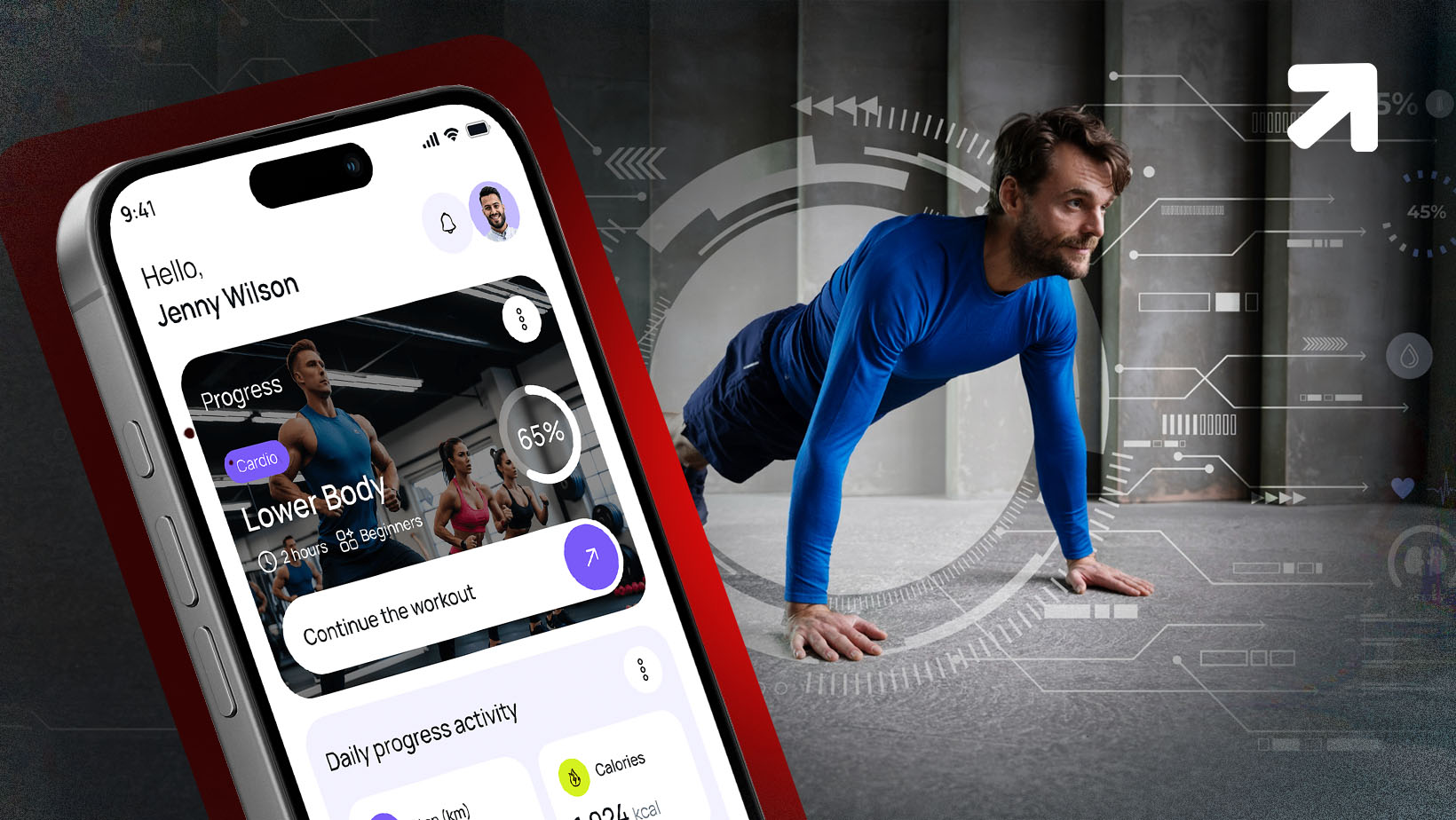
An AI-powered Fitness App is much more than a step-tracker or a calorie app. It utilises AI within the functions of its fitness apps, such as machine learning, computer vision, and predictive analytics, to personalise the user’s experiences.
The new generation of users requires fitness applications that can adjust to their fitness, targets, moods, as well as the biometric values of devices. As an illustration, Fitbod or Zenia is an app designed on the principle of AI-generated workout routines based on muscle fatigue or movement analysis.
To realise a Fitness App based on AI, the year 2026 is ideal because AI algorithms and wearable integration are cheap and more accessible.
2. The Major Features of an AI Fitness App
To become a competitive app, your app must offer innovative facilities based on value that will capture users’ interest. These are the components that are required:
2.1 Individualised Training Programs.
The AI-powered applications generate a workout schedule that will adapt as a consumer advances. Machine learning clearly optimises exercises in accordance with performance and goals.
Your app can scan the posture of the user using smartphone cameras and computer vision, and give immediate feedback to avoid the risk of injury.
2.3 Predictive Academic Transit.
Artificial intelligence predicts the future performance trends and proposes changes to improve performance.
2.4 A.I. Smart Nutrition Advice.
Your AI-based Fitness App will have the ability to use wearable data to arrange meal plans, according to levels of activity and caloric requirement.
2.5 Smart Chatbots
The use of chatbots with NLP (Natural Language Processing) allows users to communicate with the chatbot and get answers to their questions, establish objectives, and get motivation by talking to an artificial intelligence (AI) assistant.
To reach more people, your application must be on iOs and Android. It has to be made scalable by deploying cross-platform app development platforms like Flutter or React native.
3. The SS Process to Develop AI Fitness App
To make an AI-powered fitness app, strategic planning and technical accuracy are critical. The roadmap evident below is simplified and is then pursued by the top companies, such as Fluper, an AI App Development Company formed across the world.
Step 1: Market Research and validation.
Know your audience before you put a single line of code on the page. Determine target users – gym people, yoga practitioners or people in need of rehabilitation support. Competitor analysis to create your own unique selling proposition (USP).
Step 2: Determine Your Core Features.
Name key and advanced features of AI. Working with an already established firm specialising in the production of fitness apps like Fluper will guarantee integration of the best functionalities, including voice-activated AI trainers, health statistics, and intelligent notifications.
Step 3: Design the UI/UX
Users are retained by having a clean, gamified and interactive interface. Add leaderboards, achievements and progress badges to improve motivation.
Step 4: AI Integration
At this point, your fitness app development company deploys machine learning models in use to perform activity recognition and predict behaviour and make recommendations.
Step 5: Quality Assurance and Testing.
All AI algorithms need to be tested out on various data to be accurate and reliable.
Step 6: Launch and After-Sales Support.
After your AI-powered fitness app, is launched, never stop gathering data in order to improve AI predictions. The maintenance and after-sales analysis of Fluper will guarantee the success of the apps in the long run.
4. Technology Stack for AI Fitness App Development
The technology to use in developing an AI-powered fitness app, depends on your decision. Here’s a breakdown:
- Frontend: React Native (cross-platform apps), Flutter.
- Backend: Python (augmented with ML), Node.js.
- Database: MongoDB, Firebase
- Artificial Intelligence Frameworks: CNN, PyTorch, OpenCV.
- Cloud Integration: Amazon and Google cloud, and Azure.
Cross-platform app development will result in companies saving money and will be essential in maintaining consistency between the devices, a key advantage in the competitive environment in 2026.
5. Estimating the Fitness App Development Cost
Understanding fitness app development cost is essential for project planning. Pricing varies depending on complexity, features, and AI integration depth.
| Type of App |
Estimated Cost (USD) |
| Basic Fitness Tracker |
$25,000 – $50,000 |
| AI-Based Personalized Fitness App |
$60,000 – $120,000 |
| Full-Scale AI Powered Fitness App with AR/VR |
$150,000 – $300,000+ |
The cost of the AI app development also depends on whether you hire the services of in-house developers or you form a venture with a dedicated AI App Development Company, such as Fluper, which currently provides end-to-end Health and Fitness Mobile App Development solutions with AI at the centre of the limelight.
6. Challenges in the Development of an AI-Powered Fitness App.
The most advanced technologies have issues. Here are a few to anticipate:
- Data Privacy and Security: ensure both GDPR and HIPAA are followed, as far as the health data protection is concerned.
- AI Training Data: The quality and widespread data sets require accuracy.
- User Retention: Have the content and exercises in a constant state of flux to ensure the user remains interested to remain.
- Wearables: It is supposed to be compatible with Apple Watch, Fitbit, and Garmin.
7. How Fluper Helps You Develop a Fitness App with AI
Fluper is an industry leader when it comes to the development of smart, scalable, and user-friendly applications. Being a well-established company in the field of AI-powered fitness app development, Fluper incorporates the most recent AI models in real-time tracking, computer vision, and smart recommendations.
Their experience in Health & Fitness Mobile App Development will make sure that, besides being a beautiful app, your app will also work flawlessly with several devices. Both in case you want to develop a fitness app with AI or in case you need to upgrade the current version, Fluper provides custom-made solutions at reasonable prices and fast deadlines.
Fluper has specialised in cross-platform app development, and your app will function perfectly on both Android and iOS systems as well as wearable platforms and systems, to provide maximum reach and ROI.
8. Future Trends of AI in Fitness App Development (2026 and Beyond)
The AI in the fitness app innovation has a bright future. Some of the new trends are:
- AI + AR/VR Integration: 3D gyms.
- Emotion Recognition AI: Customise workouts according to mood and energy.
- Predictive Injury Prevention: AI will detect the possible threats of injuries prior to their onset.
- Wearable Data Fusion: Real-time feedback, continuous biometric monitoring.
The AI-powered fitness app solutions will become more comprehensive in 2026 – they are going to serve as a full-scale digital fitness app development company.
9. Conclusion
To create an AI-powered fitness App by 2026, it is not only necessary to have a fantastic design but also a smart use of machine learning, predictive analytics, and a personal approach. As the fitness industry rapidly shifts into automation and hyper-personalisation, businesses are compelled to move quickly to remain competitive.
By collaborating with a professional fitness application development firm such as Fluper, you would be guaranteed that your vision would turn into a scalable, smart, and future-proof product. No matter whether you want to develop a fitness app with AI to get personal training or corporate wellness, you will be ahead of the curve by using the latest AI technology.
When you are willing to transform digital fitness, Fluper is the solution to make your AI fitness app a reality.
10. FAQs About Developing an AI-Powered Fitness App
Q1. What is the cost of developing an AI-powered fitness app?
The cost of developing the AI-powered fitness app will be determined by aspects such as the complexity of the app, the AI functionalities, and the design. The predictive analytics, the real-time tracking, and the computer vision are the advanced features that can greatly impact the overall development budget.
Q2. Which technologies are appropriate during the integration of AI in fitness apps?
TensorFlow, PyTorch, and OpenCV are the frameworks which are most appropriate to AI integration. These sensors can be used to make your AI-powered fitness App analyse the behaviour of users, trends, and give them a training recommendation that works.
Q3. Why would I like to work with Fluper in the development of AI fitness apps?
Fluper is a top AI App Development Company that is good at Health and Fitness Mobile App Development. They are experienced in AI modelling, intelligent analytics, and post-launch services to provide high-performing, scalable, and user-friendly fitness applications.
Q4. Can an AI-powered fitness App be developed for wearables?
Yes. Companies like Fluper are integrating APIs and SDKs to integrate devices like Fitbit, Garmin and Apple Watch products in order to present a seamless synchronisation experience and a more customised experience of tracking their fitness.
Q5. Is AI integration expensive?
The AI app development cost will depend on the scope and complexity of the AI. Making an MVP (Minimum Viable Product) is a good way to keep costs down and provide a slow but steady addition of features as your user base continues to grow.
 16+ Years of Tech Mastery
Transforming Ideas into Market Ready Platforms |
16+ Years of Tech Mastery
Transforming Ideas into Market Ready Platforms |