Traveling has always been about stories. You arrive somewhere new, you walk the streets, you see the buildings… but a lot of the meaning hides beneath the surface. Unless you have a guide whispering in your ear, you miss it.
That’s where augmented reality in tourism steps in. In 2025, it’s no longer this futuristic toy, it’s everywhere. Point your phone at a monument, and boom: history, facts, even 3D reconstructions of how it looked in the past. That’s augmented reality travel in action.
And honestly? It’s changing the game for both tourists and businesses in the tourism industry.
So What Exactly Is AR in Travel & Tourism?
Good question. Let’s not overcomplicate it.
AR overlays digital info on top of the real world. In the tourism industry, that means:
- You’re standing at the Colosseum → AR shows gladiators fighting.
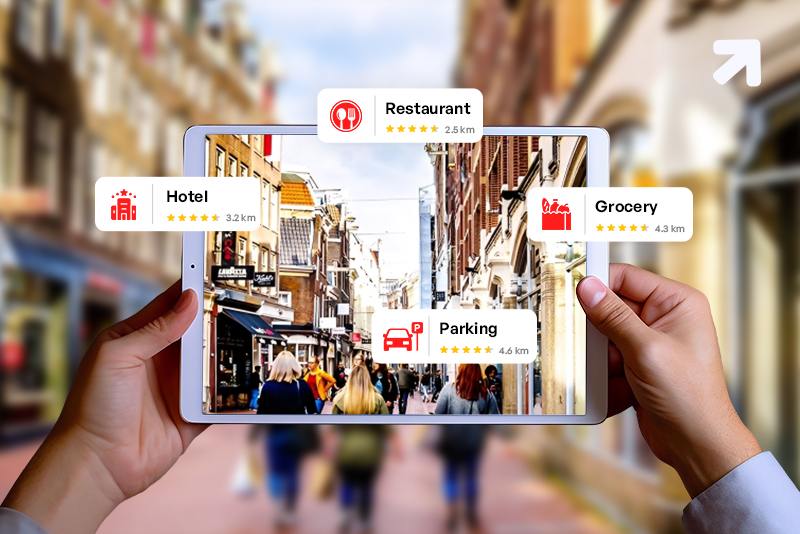
- You’re wandering a new city → AR arrows appear on the street showing directions.
- You’re in a museum → AR animations explain paintings in ways that feel alive.
So, augmented reality and tourism combine to make trips interactive, not passive. Instead of just “looking,” you experience.
Why Is 2025 the Breakthrough Year?
Here’s the thing: AR has been around for a while, but only now is it practical. Two reasons:
- Phones got powerful enough. No need for clunky headsets anymore.
- Travelers demand more. Just snapping a picture isn’t enough, they want stories and immersion.
And when you add AI in travel, the personalization makes it even more powerful. AI knows what you like, AR delivers it in the moment. Together, they make trips smarter.
Everyday Ways AR Is Already Used
Okay, let’s get real. What do augmented reality travel apps actually do?
- City Guides → Instead of Googling, you point your phone around. Info about buildings, cafés, reviews just pops up. Many startups now develop a city guide app for travelers with these features.
- Tour Sites → Walk through ruins, and the app reconstructs the site digitally. Suddenly that pile of rocks becomes a palace again.
- Navigation → Instead of staring at maps, you follow AR arrows right on the ground.
- Hotels → In the tourism and hospitality industry, some hotels use AR menus, room previews, even interactive wall art.
That’s augmented reality tourism, and it’s not some sci-fi promise. It’s happening right now.
AR + AI = Next Level
By itself, AR is impressive. But add AI and it feels like magic.
Imagine this:
- You love history. AI figures that out, so your augmented reality tourism app shows you deeper cultural details instead of generic info.
- You can’t read the menu in Tokyo. AR overlays English translations instantly.
- You’re in Barcelona and say “I want tapas nearby.” The AI suggests a place, and AR guides you straight there with arrows on the street.
This mix is why travel companies are rushing to hire a travel app development company. Many app developers with AR VR app development skills are needed because regular devs just don’t cut it here.
Is AR Only Useful in Big Cities?
Not at all. In fact, smaller towns and heritage sites might gain more.
Think about it: small sites can’t afford multilingual guides or fancy visitor centers. But an augmented reality tourism app gives every tourist the same rich experience, history, stories, directions, without hiring extra staff.
So whether it’s a hidden village or a world-famous landmark, AR fits.
The Big Question: Travel App Development Cost
Everyone asks this. How much does it cost to build an augmented reality travel app?
Here’s the rough picture:
- Basic app with AR maps or city guides: $20k – $40k.
- Advanced AR travel app with AI and 3D reconstructions: $50k – $100k+.
- Full custom AR VR app development (say, for a government or big hotel chain): $150k and up.
That’s why people rarely try DIY solutions. They prefer a professional travel app development company to get it right.
Hotels and Resorts Are Loving It
In the tourism and hospitality industry, AR is like a secret weapon. Hotels and resorts use it to:
- Show interactive previews of rooms.
- Let guests scan codes to explore hotel facilities in AR.
- Offer cultural storytelling, imagine pointing your phone at a mural and seeing animations about its origin.
Pair that with AI, and the app adjusts itineraries depending on the guest. Families see AR maps to kid-friendly attractions. Business travelers see conference spots and lounges.
But Will AR Replace Human Tour Guides?
Honestly, no.
Sure, an augmented reality travel app can guide you, but humans bring emotion, humor, personal touches. AR just helps them look cooler.
In fact, some guides already use AR as part of their tours. Instead of just telling you, they show you reconstructions on the spot. That makes the tour richer, not redundant.
Should Businesses Invest in AR Tourism Apps?
If you’re traveling, you’re probably wondering: Is it worth building one?
Ask yourself:
- Are your competitors offering AR yet?
- Do your guests struggle with info, directions, or translations?
- Would AR save you money (less printing, fewer brochures, fewer staff)?
If the answer is yes, then working with a travel app development company to build an augmented reality tourism app makes sense. Start small, scale later.
The Future: AR and VR Together
By 2025, we already see hints of this. Travelers use VR at home to “preview” destinations. Then, when they arrive, AR guides them on the ground.
That combo, AR VR app development, is basically the future of travel. By 2030, using a plain old map might feel outdated.
In 2025, travel is different. Augmented reality in tourism turns a basic stroll through a city into an interesting story. You can glimpse how a monument looked hundreds of years ago when you point your phone at it. Or maybe you don’t know how to get around a new city, and AR arrows lead you straight to your hotel. That’s what makes a travel app with augmented reality so cool.
The tourism industry has always been about experiences, but now people expect more than just maps and brochures. Augmented reality tourist apps may help you get around a place, show you around using AR, and even allow you to see ruins more realistically. In the tourist and hospitality business, hotels employ AR to show off rooms, make digital menus, and share stories about their culture.
When you add AI to travel, things get even smarter. AI learns what you like, such as food, art, and nightlife, and AR provides you personalized tours right on your screen. That’s why a lot of businesses are employing a company that makes travel applications to make their own. Making a travel app can cost anything from $20,000 to more than $100,000, but tourists love it.
The future is clear: tourism and augmented reality are now the same thing. This is true for everything, from making AR VR apps to taking AR city tours.
Wrapping It Up
Travel in 2025 feels different. Thanks to augmented reality tourism, trips are no longer just about being there. They’re about experiencing the layers behind every place.
With augmented reality apps for tourism, you get:
- Easier navigation.
- Deeper storytelling.
- Personalized journeys (thanks to AI in travel).
For businesses, the opportunity is clear. Whether you’re a hotel, a tour company, or even a local heritage site, offering AR makes you stand out. And with the right travel app development company, you can create an augmented reality travel app that actually delivers.
So next time you’re exploring a city, don’t just walk blindly. Open your AR app, point at the streets, the monuments, the cafés… and watch a hidden world unfold.
Because the future of tourism isn’t about just seeing, it’s about experiencing. And AR makes that possible.
 16+ Years of Tech Mastery
Transforming Ideas into Market Ready Platforms |
16+ Years of Tech Mastery
Transforming Ideas into Market Ready Platforms |