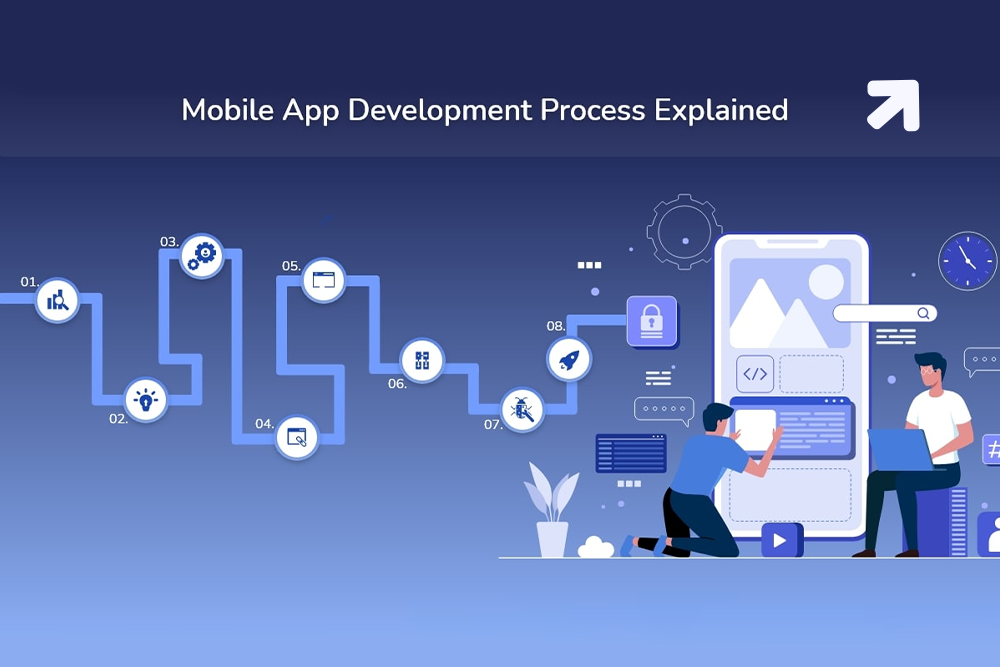
Looking into the mobile interface, mobile application seems to be very easy. But it involves with various complicated procedure, then only we get the end product as an amazing mobile application. Mobile app development begins with the planning process. It involves creation of idea, then proceeds with the selection of platform which is the crucial step for any Mobile Application Development process. After that wireframe comes into the picture which would help in the expansion of initial idea, establishment of structure and functionality. Within the process there is Project Communication Strategy, it involves with the research where the target audience is recognized.
After the planning, there it comes with the development process, where the prototype is being tested i.e. the look and functionality according to your vision. Then it continues with the building of backend, an area where IT administration and app development must interact with each other. Within the mobile application development process, some tests are conducted which are centred on checking the compatibility, usability, functionality and any sort of interruptions. After the test, then it comes the last process of Mobile Application Development Process i.e the marketing process.
There are various things which are needed to be tested rigorously before launching it. These tests are must because this is the last opportunity when all the bugs and errors within the mobile application are verified thoroughly. After all the bugs and errors are verified then it comes up the grand day when the mobile application is launched.
With all the steps below, it proves that it is a long and a challenging process.
The process does not come to an end, it continues with the post support period,i.e. in case any bugs or errors slithers in between then it can be rectified within that period.
1. Ideation & Planning
The first stage in the mobile app development process is ideation and planning. During this phase, the main objective is to define the app’s purpose, identify its target audience, and understand market needs. It’s essential to outline the app’s features, create a roadmap, and establish realistic timelines. This stage also includes market research to ensure the app is solving a genuine problem and will stand out from competitors. A detailed project plan is crafted, serving as the blueprint for the entire development process.
2. UI/UX Design
The UI/UX design phase focuses on the user interface (UI) and user experience (UX) of the app. Designers create wireframes, prototypes, and mockups, ensuring the app is visually appealing and user-friendly. The goal is to make navigation intuitive and the app enjoyable to use. A well-designed app boosts user engagement and retention. This phase also includes testing of prototypes to gather early feedback, enabling designers to refine the app’s flow and features for better usability.
3. Development
Once the design is finalized, the development phase begins. The app’s architecture, backend, and front-end development are executed. Frontend development focuses on the elements users interact with directly, such as buttons and text fields. Backend development involves creating the server-side components, databases, and APIs needed to make the app function. This phase involves writing code, setting up databases, integrating third-party services, and ensuring that all features work smoothly. The development stage typically includes collaboration between developers, designers, and product managers to ensure everything aligns with the initial plan.
4. Testing
After the app is developed, it’s time for rigorous testing. Testing helps identify and fix bugs, errors, and performance issues that may affect the app’s functionality. The goal is to ensure that the app performs as intended across various devices, screen sizes, and operating systems. Testing includes different types such as functional testing, performance testing, usability testing, and security testing. User feedback is also essential in this phase, as beta testing can help highlight potential improvements or areas for refinement.

5. Launch & Maintenance
After thorough testing and quality assurance, the app is ready for launch. During this phase, the app is published to app stores like Google Play Store or Apple App Store. The launch also includes marketing strategies to ensure the app reaches its target audience effectively. Post-launch, the app enters the maintenance phase, where continuous monitoring, bug fixes, updates, and performance improvements are implemented. Regular updates based on user feedback and new features ensure the app remains relevant and functional.
Contact Fluper for know more about Mobile Application Development Company Process.
 16+ Years of Tech Mastery
Transforming Ideas into Market Ready Platforms |
16+ Years of Tech Mastery
Transforming Ideas into Market Ready Platforms |