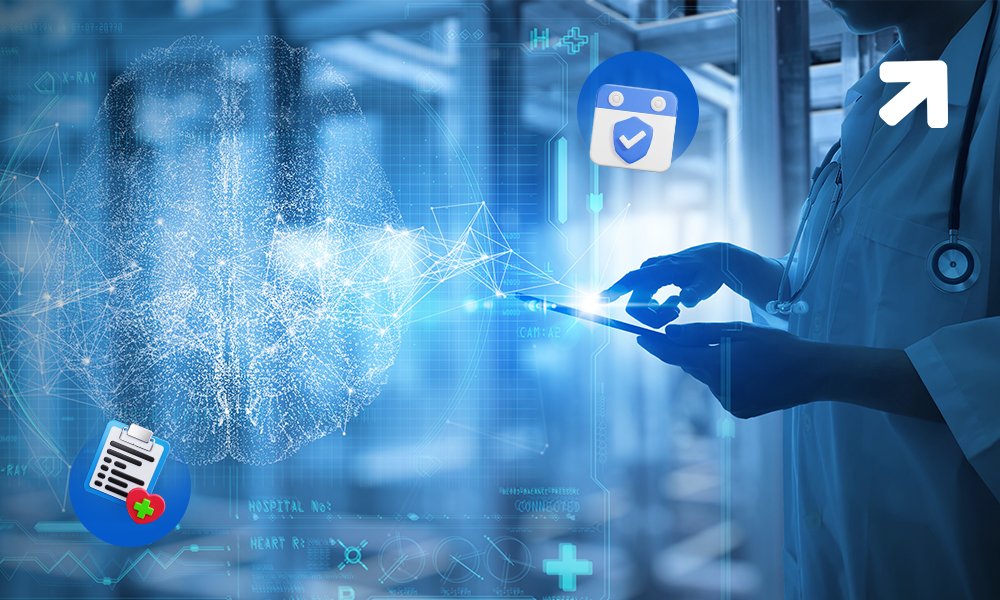
Big data comprises vast and complex datasets with volume, speed, diversity, and veracity that traditional management and analytical techniques find difficult to handle. In the fields of healthcare and biotechnology, big data covers electronic health records (EHRs), genomic sequencing information, as well as live patient monitoring results from wearable devices.
The processing and analysis of massive datasets have unlocked unprecedented opportunities. They enable scientists, researchers, and healthcare professionals to understand diseases, predict health outcomes, and deliver precise, individualized care.
Overview of Personalized Medicine and Biotech Innovations
Personalized medicine strives to customize medical care specifically for each patient’s unique traits. It assesses lifestyle choices, environmental circumstances, and genetic profiles to identify the best path forward. Innovations in biotechnology have markedly expedited personalized medicine’s integration into healthcare practice. These include CRISPR gene-editing technology, sophisticated diagnostic instruments, cutting-edge sequencing methods, and cell line development services that automate every critical CLD workflow step.
These discoveries are being used by researchers and doctors to identify disease signs, project therapy reactions, and prevent diseases. Combining biotechnology with personalized medicine drives a healthcare revolution from a one-size-fits-all strategy to one customized especially for every patient.
Importance of the Intersection Between Big Data and Biotech
Big data analytics helps scientists to extract important insights from the enormous daily streams of produced biological and clinical data. Advancements in personalized medicine depend on this since it enables the identification of hitherto unnoticed trends, correlations, and patterns.
For example, big data analytics lets us find genetic mutations that link to certain diseases and predict how patients will react to special drugs. Plus, if we combine big data with new biotech innovations, it can lower healthcare costs and speed up the making of treatments which save lives.
The Role of Big Data in Personalized Medicine
Data Collection From Genomic, Proteomic, and Clinical Sources
Personalized medicine builds upon a foundation of extensive, varied datasets, spanning genomics, proteomics, and clinical information. Genomic data presents an intricate blueprint of one’s genetic composition; it reveals disease predispositions, predicts drug reactions, and uncovers inherited conditions. Proteomic analysis augments this by examining proteins within the body, a key to deciphering cellular activities and pinpointing disease biomarkers. Clinical data injected into the mix adds depth by contextualizing genetic and proteomic findings within real-world medical scenarios.
Big data technologies empower researchers. They fuse disparate datasets into cohesive, actionable insights. This holistic approach enhances our understanding of complex diseases and lays the groundwork for developing highly targeted treatments. Advancements in sequencing technologies and EHRs have revolutionized the sheer scale of data collection. High-throughput sequencing now generates terabytes of genomic data within hours while EHRs offer a continuous stream of clinical information. Essential for handling these massive datasets, big data platforms manage, store, and analyze this wealth of information, making it accessible and usable for researchers and clinicians alike.
Real-Time Analysis and Patient-Specific Treatment Protocols
Big data revolutionizes patient-specific treatment protocols, enhancing speed and precision. Healthcare providers, through real-time data analysis, interpret complex datasets almost instantaneously. This enables timely decisions tailored to individual patients. For instance, algorithms scrutinize a patient’s genetic profile in tandem with clinical history, thereby recommending the most effective drug or therapy while minimizing trial-and-error approaches.
This capability proves especially vital in chronic disease and cancer management, where time frequently is of the essence. In oncology, for instance, real-time analysis of tumor genomics may pinpoint actionable mutations. This guides oncologists toward targeted therapies with the highest probability of success. Likewise, patients battling chronic conditions such as diabetes or cardiovascular disease reap benefits from continuous monitoring devices that supply predictive models with live data, enabling proactive interventions before complications emerge.
Big Data Driving Biotech Advancements
Enhancing Drug Discovery and Development
The use of big data in the process of finding new drugs is changing the pharmaceutical field. While traditional methods depended on slow, expensive trial-and-error processes, big data empowers researchers to swiftly sift through immense genomic, proteomic, and chemical datasets for viable drug targets. Leveraging machine learning algorithms, scientists forecast interactions between different compounds and biological systems which cuts down preclinical testing time significantly.
Big data not only enables the repurposing of existing drugs but also allows researchers to uncover patterns by analyzing patient data and historical drug performance. This leads them to discover new uses for approved medicines. Such an approach is particularly beneficial in dealing with rare diseases where conventional drug development could be too expensive.
Streamlining Clinical Trial Processes
Big data is transforming clinical trial design and conduct, yielding enhanced efficiency, reduced costs, and a focus on patients. It addresses one of the most substantial challenges: patient recruitment. By analyzing electronic health records, social media activity, and wearable device data through big data analytics, eligible participants are swiftly identified. This targeted approach guarantees that the right patients enroll swiftly; it diminishes delays and enhances the prospects for successful outcomes.
Big data not only helps with recruiting but also lets clinical trial participants be monitored in real time, hence improving safety and efficacy evaluations. Offering researchers a complete picture of patient responses to therapies, wearable devices and mobile health apps compile ongoing data on vital signs, activity levels, and medication adherence. This instant feedback facilitates more adaptive trial designs.
Bottom Line
Integration of big data with biotechnology and healthcare is profoundly changing knowledge, treatment, and illness prevention. Personalized treatment becomes reality by gathering and evaluating large volumes of data. This method allows tailored therapies for each patient that improve outcomes while lowering inefficiencies.
Big data concurrently enables the biotech sector to maximize clinical studies and fast-track drug development. All these advancements lead to unprecedented precision in predicting disease progression. Big data provides the basis for more fair, efficient, and effective healthcare systems as well as stimulates innovation.
 16+ Years of Tech Mastery
Transforming Ideas into Market Ready Platforms |
16+ Years of Tech Mastery
Transforming Ideas into Market Ready Platforms |