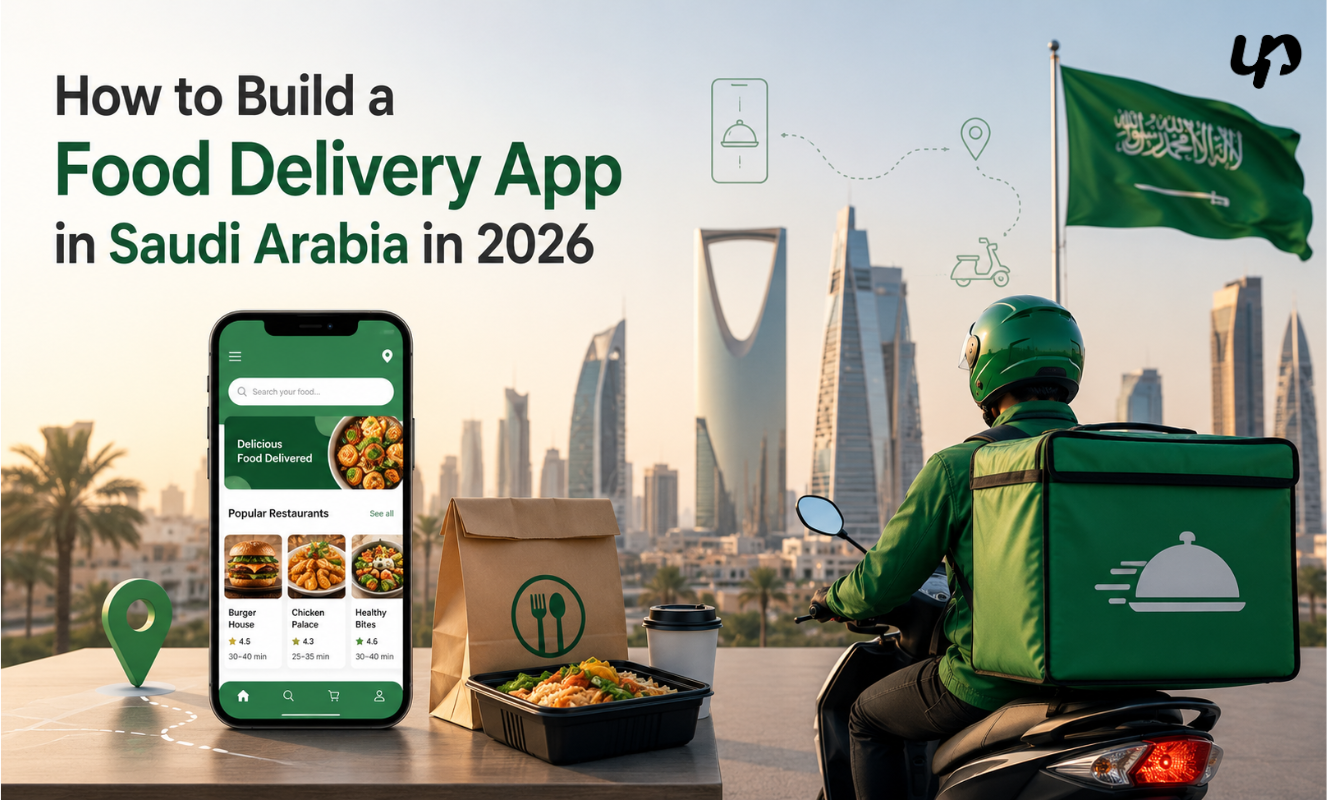
How to build a food delivery app in Saudi Arabia entails determining the appropriate delivery model (a restaurant aggregators, a cloud kitchen platform or a grocery & Q-Commerce), defining the right set of features (including restaurants’ listed menus, live order tracking, multi-payment modes such as Mada and STC Pay, bilingual support in English and Arabic, driver assignment), and choosing a robust technology stack and working with a well-established mobile app development company in Saudi Arabia with the expertise in app development and Saudi market consumers’ preferences and behaviour.
In food ordering app development such as that of Talabat in the Kingdom, your platform needs to compete with the great UX presented by Talabat, HungerStation, and Jahez; given that Saudi consumers are among the savviest around the world when it comes to digital apps- they will discontinue any food delivery app with slow-performing or flawed UI/UX, let alone missing the support for the Arabic language. Developing a food delivery app cost in Saudi Arabia can start with SR150K for a simplified MVP and can reach upwards of SR1.5 Million with advanced features such as ML-supported recommendations and the whole operation of a cloud kitchen system.
As a leader in the mobile app development sector in Saudi Arabia, Fluper creates world-class food delivery platforms compliant with performance, regulatory standards and UX to make sure they meet with the Saudi food tech sector’s high demand and stringent requirements.
Why Saudi Arabia Is One of the World’s Best Markets for Food App Development
The food delivery market in Saudi Arabia is among the fastest growing in the world and the underlying reasons for the growth are structural rather than transient in nature. Saudi Arabia boasts a young, mobile-first population with a median age of 29 years; smartphone penetration rates higher than 95%, perhaps one of the highest in the world; and a culinary tradition that prioritizes takeaway and delivery options over homemade meals, resulting in high per capita food ordering frequency. The drive to diversify the economy through Saudi Vision 2030, coupled with the accelerating commercial and lifestyle growth of Riyadh and Jeddah, and the booming restaurant and cloud kitchen space across the Kingdom have cultivated a supply chain that’s expanding just as quickly as customer demand.
The Saudi food delivery market was estimated at approximately USD 4.2 billion in 2023 and is expected to expand at a CAGR greater than 14% through 2028.
In this increasingly competitive food delivery marketplace with leaders like Talabat, HungerStation, and homegrown Saudi provider Jahez, there remains an appetite for niche platforms that provide food delivered to customers in specific cities, regions, or cuisine categories with a more streamlined user experience than broadly catered services offer. Vertical specialization has found a ready and waiting audience that current aggregators fail to adequately address, whether focusing on specialized Arabic home cooking, premium restaurant dining experience delivered at home, specific dietary needs with meal planning applications, or ultra-fast grocery and quick-commerce solutions.
Saudi Arabia’s food delivery space presents a ripe market for businesses and entrepreneurs interested in launching food delivery apps by 2026- a market on the cusp of a critical transition from the ‘early majority’ consumer segment towards broader adoption by mainstream society. While opportunities abound, a strategic approach will be required to secure a competitive and defensible position as this dynamic market continues to mature.
Must-Have Features for a Food Delivery App in Saudi Arabia
1. Discovery and Menu Browsing
The fast and rich restaurant discovery experience across category browsing, cuisine filtering, displaying ratings and reviews, dietary filtering (including verification of halal is standard for the Saudi market), high quality photography to meet the expectations of Saudi users familiar with the level of output quality in Talabat/HungerStation listings. Menus should load quickly and be offline-capable for areas with inconsistent connections.
2. Live Order Tracking
Tracking the courier from the accepted order all the way through to food collected and delivered (with an updated estimated time of delivery, showing their location on a map, and receiving push notifications of each step of the journey). Real-time tracking is the highest-impact feature in food delivery and the single most direct factor in reducing inbound customer service inquiries regarding order status.
3.3. Arabic-English Bilingual UI
A fully Arabic UI from the first wireframe, including R/L page alignment, all restaurant names and items in Arabic, Arabic Push notifications, Arabic customer service, and Arabic feedback- rather than adding on later once the app has already been developed in English. Saudi Market: Bilingual is not a value add- its a minimum entry to market.
4. Saudi Payment Integration
Support for Mada debit cards as the primary payment option and support for STC pay, ApplePay, GooglePay, Visa, Mastercard and the use of a working cash on delivery with driver change capabilities. Ensuring the system is built in line with SAMA’s requirements and can effectively handle the Saudi market payment processing needs are key. Payment abandoned orders will skyrocket for any app that views Saudi payment processing as an additional thought to Saudi app development.
How Much Does Food App Development Cost in Saudi Arabia
The final bill for building a Saudi food app boils down to the sophistication of the app, the number of cities you’re planning to hit in the launch phase, the extent of personalized functionality you have in mind for the end-users, and how deeply you want the app to support in-depth analytics and data management tools. Cloud kitchen management tools would also have to be paid for if you plan on having them with the consumer front-end of your food delivery app.
Basic MVP app for Saudi Arabian market: A focused MVP with restaurant listings for just one city, a real-time order tracking feature, both Mada and card payment integration options, an Arabic-English multilingual user interface, and a relatively basic mobile driver application, and an application for restaurants will typically range from SAR 150,000 to 280,000 and can be built in just 12-18 weeks.
This would be the ideal first step for an entrepreneur wanting to confirm the food ordering concept within one city prior to expansion across multiple cities in the KSA.
Mid-complexity food app development: A comprehensive food app developed with mid-tier complex capabilities and functionalities, such as AI-based recommendations, planned ordering and scheduled ordering, group ordering and a loyalty program, along with advanced dispatcher driver features and comprehensive restaurant analysis data, will cost anywhere between SAR 300,000 and 600,000. Such apps require a development time of anywhere from 5 months to 8 months.
High-complexity food app for KSA: An application that delivers all features and functionalities for multi-city Saudi operation up to a standard likeTalabat(food delivery), will include an in-built system for cloud kitchen management, real-time demand management and dynamic pricing (including for Ramadan), a fully featured API for enterprise restaurant systems, personalized ordering with AI-powered options, and comprehensive operational dashboards- and can be started from SAR 700,000 to 1.5 millionSAR. The latter would increase depending on the scope of the project and your internal cloud computing capabilities.
Annual support for food app development services: The ongoing maintenance of a Saudi food delivery application, encompassing the usage of mapping services (which can be pricey), constant updates for payment gateway compliance, scalable cloud hosting that adjusts during peak demand periods and the continuous integration of additional features, commonly represents around 18 to 22% of the initial building costs of food delivery applications.
| Cost Item |
Estimated Cost (SAR) |
| Cloud infrastructure (AWS Bahrain region) |
15,000- 80,000 / year |
| Mapping API costs (Google Maps) |
10,000- 50,000 / year |
| SAMA payment compliance maintenance |
8,000- 25,000 / year |
| Security & performance updates |
8,000- 20,000 / year |
| Ramadan peak scaling infrastructure |
5,000- 20,000 / year |
| General maintenance (18-22% of build) |
30,000- 200,000+ / year |
Why Fluper Is Saudi Arabia’s Top Food App Development Partner
Fluper is the food delivery software company in Saudi Arabia for food delivery startups, restaurant groups and cloud kitchen providers: Where high traffic during peak hours is not an option. The ability to remain SAMA compliant on payments and fulfill customers’ expectation of an Arabic first user experience. With direct, hands-on food delivery platform design and development, custom order management system engineering, STC Pay and Mada integration, the need for seamless Arabic-English language UX, the creation of the back office / restaurant control panel and the driver allocation management needed to service Saudi Arabia’s busiest delivery periods, this is where Fluper food tech capabilities shine.
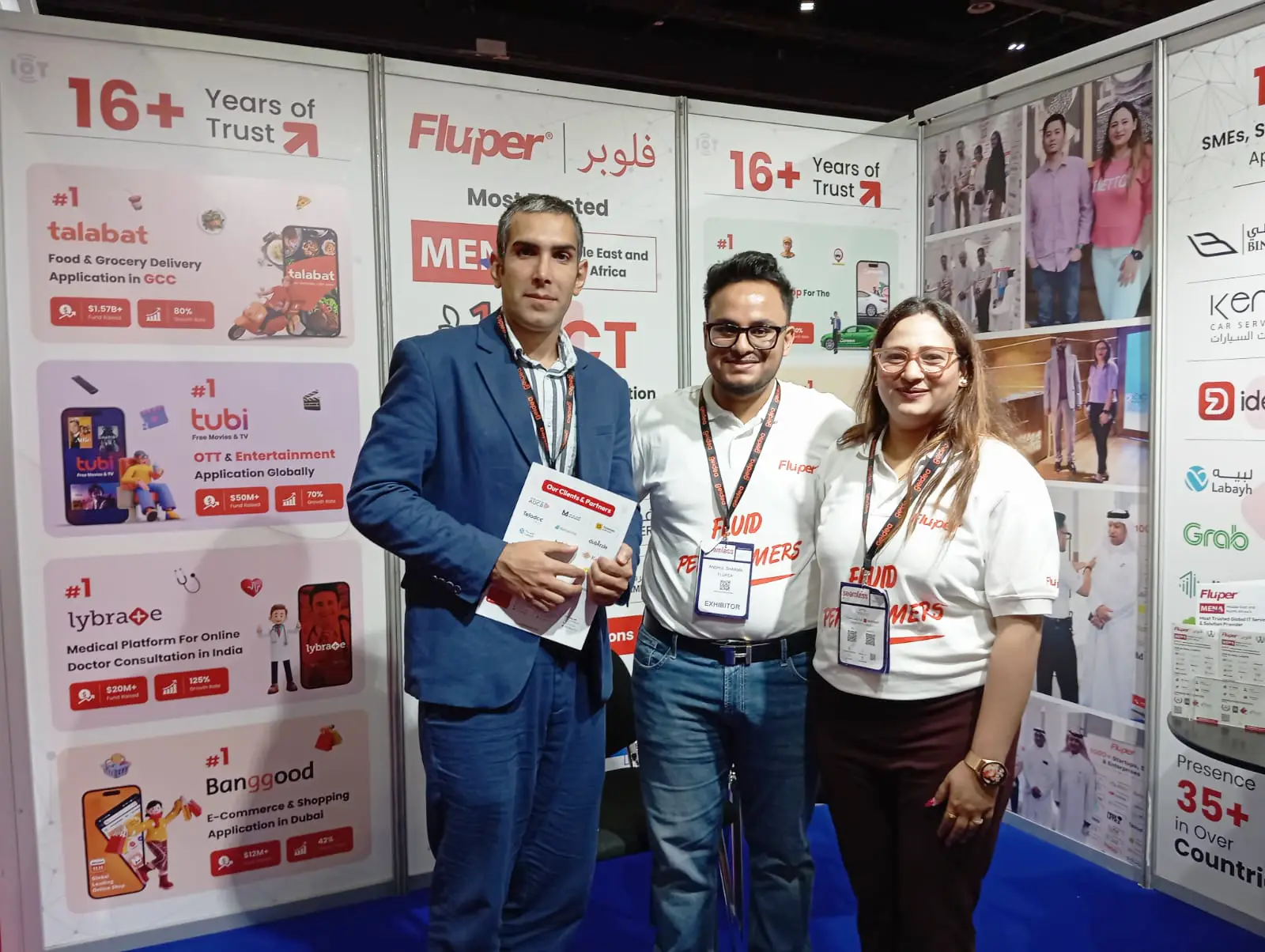
With 16 years of experience with an unmatched client roster and a track record that saw Fluper help develop a food ordering app like Talabat to manage over 100K food delivery orders per day and 2 Million users, no other partner offers this level of food delivery software delivery within Saudi Arabia.
FAQs
- What does a Saudi Arabian food delivery app cost?
A simple MVP food app for a single city can cost around SR 150,000, whereas a fully fledged, multi-city food ordering platform could cost SAR 1,500,000 or more. Mid-level app development projects for the food delivery sector in the Saudi Arabian market usually cost in the region of 300,000 and 600,000 SR. For more precise estimates, our discovery team must analyze your project needs.
- How long does food delivery app development take?
A basic MVP can be delivered between twelve and eighteen weeks. A mid-complexity platform takes between five and eight months, whereas a complex, fully featured Enterprise version may take nine to fourteen months. In most cases, successful development hinges on a clear scope from the project’s initiation.
- Do Saudi Food Delivery Apps need payment via Mada?
Definitely. Mada is the prevalent mode of payment for ordering food in Saudi Arabia and if this payment option is excluded at launch, a significant number of people will likely abandon the app at the time of making payment. Therefore, Mada integration must be considered SAMA compliance from the get-go and seamlessly integrated into the architecture; it can’t just be an after-thought.
- Is there Arabic language support in the Saudi food Delivery App?
Without exception, Arabic language must be available. This goes without saying for any significant food delivery app intended for use in Saudi Arabia; Arabic RTL interface, content in Arabic (menus, push messages, etc.), and Arabic support are non-negotiable features. Saudi users favor the Arabic interface, especially during the ordering of food transactions, to the point where English is not economically viable.
- What makes Fluper’s Food Delivery App Development the best in Saudi Arabia?
Fluper delivers with a best-in-class, proven food delivery domain expertise and scale-like scaling Talabat to 100k plus daily order. Our team is adept with Saudi payment integrations (Mada, STC Pay), SAMA compliance build-out and Arabic/English bilingual UIs. Our unique discovery-centric, data-driven methodology provides serious food delivery app development services in the Kingdom with clear insight into the path toward ROI and scalable success.
 16+ Years of Tech Mastery
Transforming Ideas into Market Ready Platforms |
16+ Years of Tech Mastery
Transforming Ideas into Market Ready Platforms |