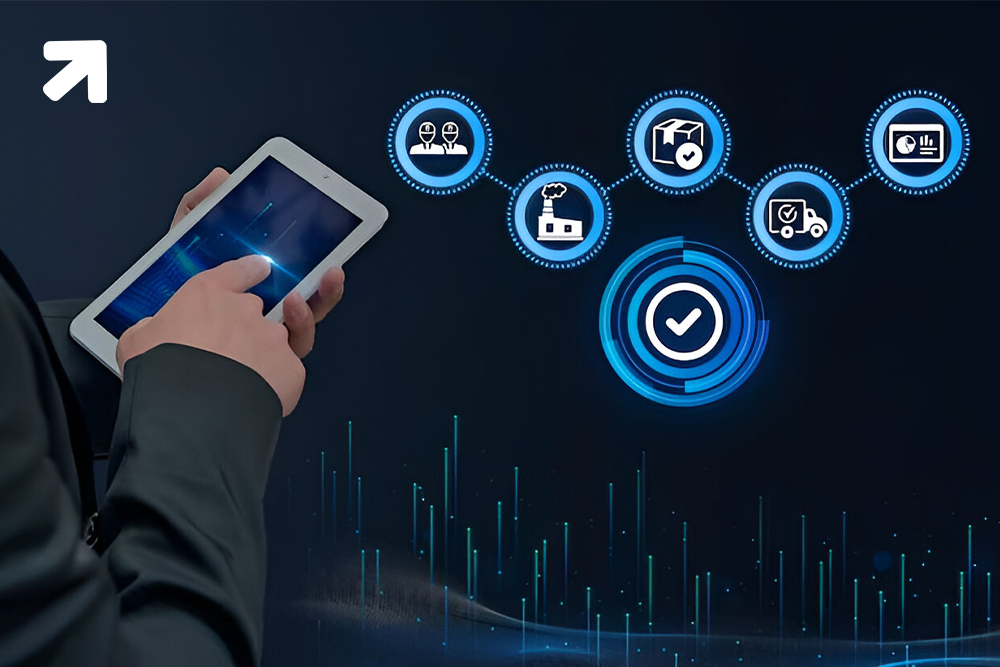
In 2026, logistics and supply chain is still digitally transforming exponentially. Large, small, and mid-size companies alike are investing in smart platforms for process automation, route optimization of deliveries, greater transparency, and customer satisfaction enhancement. If you are looking for logistics app development, then now is the best time around—equipped with the ideal tech stack, well-defined roadmaps, and valuable advice from a logistics software development services organization.
In this blog, we’ll explain what it takes to create a logistics app in 2026, from selecting the optimum technology stack to factoring in cost and creating a development roadmap.
Why Invest in a Logistics App in 2026?
The need for real-time visibility, predictive analytics, and end-to-end coordination of supply chains has never been greater. Whether you’re handling last-mile delivery, freight forwarding, or warehouse operations, a supply chain & logistics app can assist in lowering costs, enhancing delivery times, and maximizing resources.
A contemporary logistics app can provide:
- Real-time GPS tracking of shipments
- Automated dispatch and routing
- Inventory and warehouse management
- Proof of delivery and digital signatures
- Integration with ERPs, CRMs, and IoT devices
Key Features of a Modern Logistics App
To develop a logistics app that meets today’s user and business expectations, you’ll need to include the following features:
1. User Roles
- Admin Panel (dispatchers, managers)
- Driver/Agent App
- Customer App or Portal
2. Real-Time Tracking
GPS integration to monitor vehicle location and route efficiency.
3. Route Optimization
AI-based dynamic routing to reduce fuel costs and delivery delays.
4. Order & Shipment Management
Ability to view, assign, and update delivery statuses in real time.
5. Inventory & Warehouse Sync
Warehouse system integration to handle stock and logistics centrally.
6. Push Notifications & Alerts
Auto-updates regarding delivery status, ETAs, or route changes.
7. Analytics & Reports
Data-driven dashboards for fleet performance, delivery time, and cost analysis.
Best Tech Stack for Logistics App Development in 2026
While choosing a tech stack, keep scalability, performance, and real-time data handling in mind.
Frontend (User Interfaces)
- React Native or Flutter: For cross-platform mobile app development
- React.js or Angular: For web or admin dashboards
Backend
- Node.js or Python (Django/Flask): For high-performance APIs
- Java or Go: For processing large-scale enterprise logic
Databases
- PostgreSQL / MySQL: For relational data
- MongoDB: For flexible document-based data
- Redis: For real-time notifications and caching
Cloud & DevOps
- AWS / Google Cloud / Azure: Cloud scalability and storage
- Docker & Kubernetes: Containerization for simpler deployment
- CI/CD Tools: For quicker and more stable updates
APIs & Integrations
- Google Maps or Mapbox: For location and routing
- Twilio or Firebase: For SMS and push notifications
- Stripe or PayPal: For in-app payments if required
Cost to Develop a Logistics App in 2026
The cost to develop a logistics app varies based on features, platforms (iOS, Android, Web), tech complexity, and development region.
Here’s an approximate cost breakdown:
| Feature Scope |
Estimated Cost (USD) |
| MVP (basic features) |
$25,000 – $40,000 |
| Mid-level functionality |
$40,000 – $75,000 |
| Full-featured enterprise app |
$75,000 – $150,000+ |
Logistics software development services from North American and European agencies are generally costlier, whereas offshore development teams (India, Eastern Europe, MENA) can provide more affordable pricing without cutting corners.
Roadmap to Develop a Logistics App
Developing a logistics software project successfully entails a systematic process. Here’s an easy-to-follow roadmap:
1. Requirement Gathering & Research
Learn about your logistics process, user requirements, and regulatory needs.
2. UI/UX Design
Develop wireframes and high-fidelity designs specific to user roles.
3. MVP Development
Develop an MVP with core features such as real-time tracking and order management.
4. Testing & QA
Conduct functional, UI/UX, performance, and security testing.
5. Deployment
Deploy on the cloud with automated CI/CD pipelines.
6. Post-Launch Support
Tune bugs, gather user feedback, and implement advanced features such as predictive analytics or blockchain tracking.
Final Thoughts
With the proper strategy and technology, you can develop a supply chain & logistics app that fosters efficiency, scalability, and real-time visibility. You’re either a startup or a well-established logistics player; using a specialized logistics software development services provider will make your app reliable, secure, and future-proof.
Need assistance to create a logistics app specific to your business? Reach out to a reliable software development partner and begin the journey toward revolutionizing your logistics operations in 2026.
 16+ Years of Tech Mastery
Transforming Ideas into Market Ready Platforms |
16+ Years of Tech Mastery
Transforming Ideas into Market Ready Platforms |